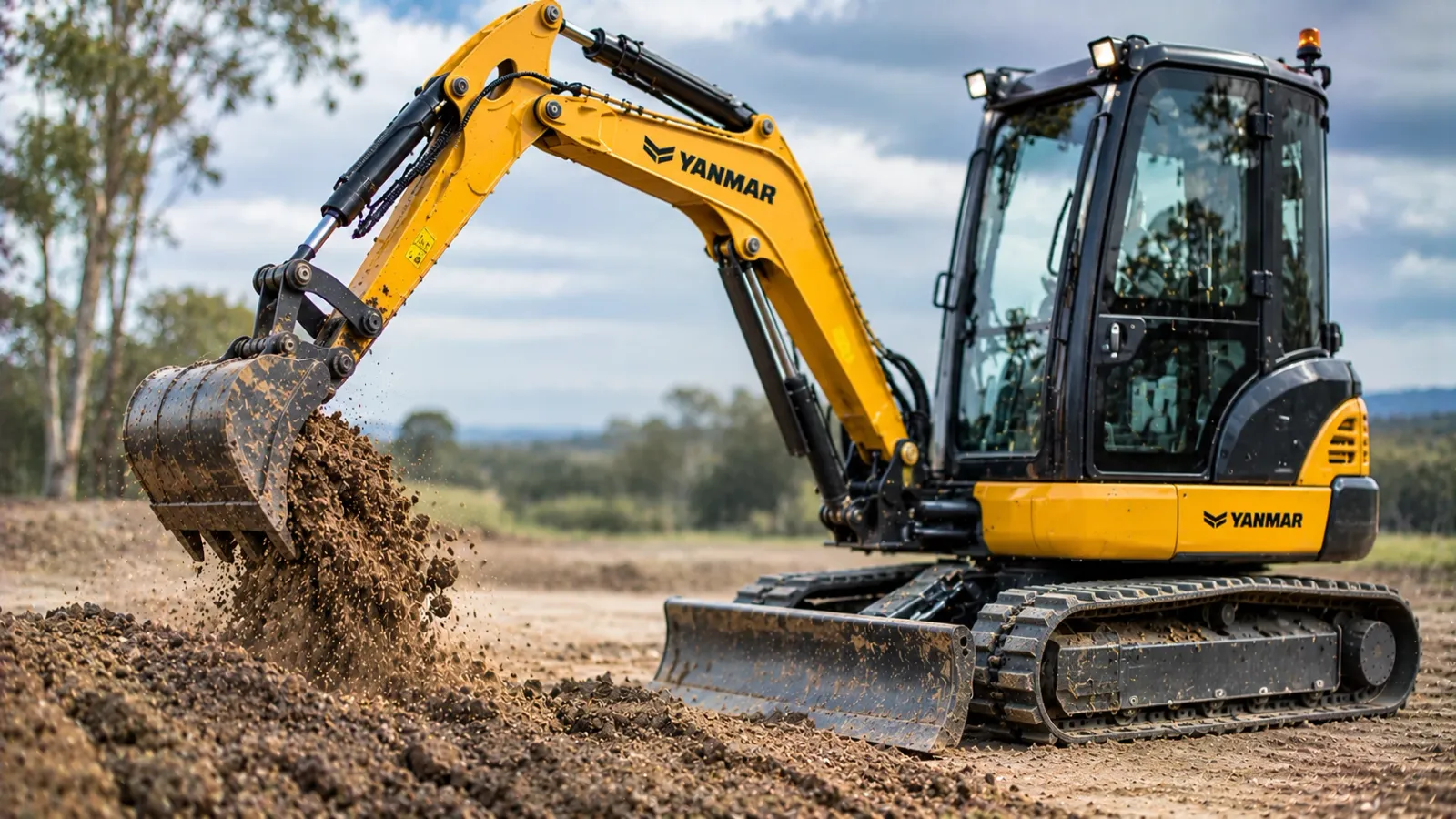
Attachments
Excavator attachments explained
One machine, many jobs. A general guide to common attachments and what to check before you buy or sell them.
Common attachments
What each one does
| Attachment | Notes |
|---|---|
| Digging buckets | General, trenching and cleaning buckets in various widths. Match width and capacity to the machine and the soil. |
| Quick hitch | Lets the operator swap attachments quickly. Check pin sizes, compatibility and any safety locking requirements. |
| Hydraulic hammer | Breaks rock and concrete. Needs suitable auxiliary hydraulic flow and lines, and an operator who knows how to avoid blank firing. |
| Auger drive | Drills post and pier holes. Torque and hole diameter depend on the machine size and auger bit. |
| Grapple and thumb | Pick up logs, rocks and demolition debris. Thumbs mount on the stick; grapples usually need extra hydraulic lines. |
| Ripper tooth | Breaks hard ground and tree roots before digging. |
| Tilt bucket and tiltrotator | Angle the bucket for shaping and grading. Tiltrotators add rotation but require compatible hydraulics and controls. |
| Compaction plate | Compacts trench backfill. Check weight and flow requirements. |
Before you buy
Check compatibility first
- Machine size and rated lifting capacity
- Hydraulic flow and pressure available
- Auxiliary lines fitted to the boom and stick
- Quick hitch type and pin sizes
- Operator training and the manufacturer's instructions
For safe working practices around plant, see Safe Work Australia.
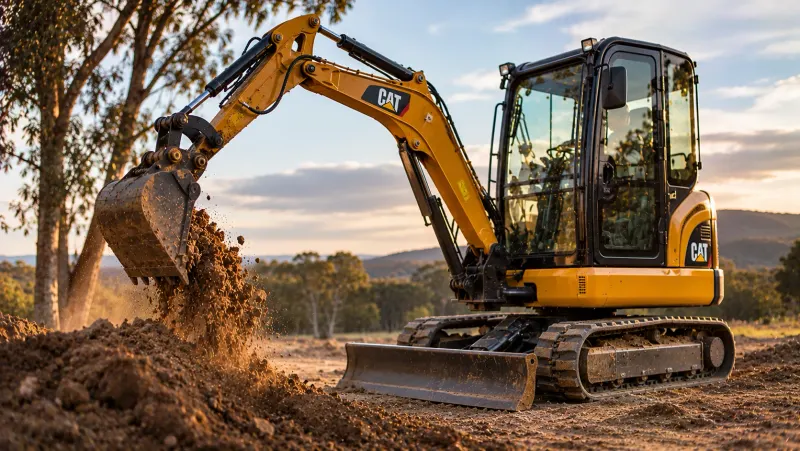
Selling attachments with your machine
List attachments in your ad and photograph each one. Buyers value a complete package with a clear description of condition. You can list the excavator and its attachments together on the marketplace.
Selling an excavator with attachments?
Include every attachment in your free listing so buyers can see the full package.